Fabric and care
What the clothing tag says: fiber percentages, generic names and the care line
A tag that reads 95% polyester, 5% spandex, machine wash cold is not marketing. It is a legal document, and the rules behind it decide what a maker may and may not print. Here is what the two federal labeling rules require, what the percentages mean for how a piece fits and lasts, and what the Eytino catalogue looks like when you count its fabrics.
15 minute read · sources read 4 September 2026
Start with the piece
Eytino tops & blouses to look at first
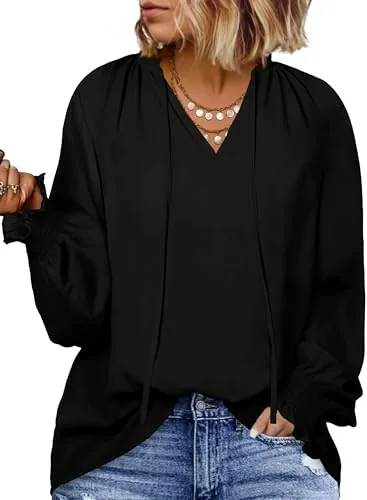
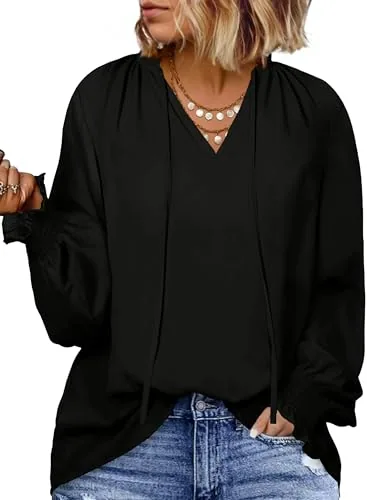
size 3X · chiffon · long sleeve
4.1 out of 5 from 1,857 ratings

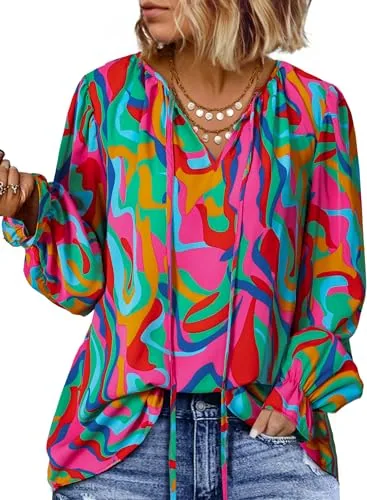
size 2X · long sleeve
4.1 out of 5 from 1,857 ratings
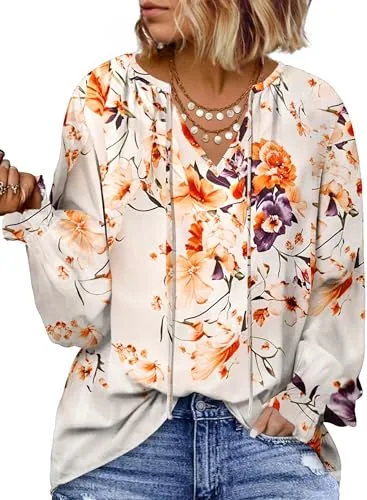
size 5X · long sleeve
4.1 out of 5 from 1,857 ratings
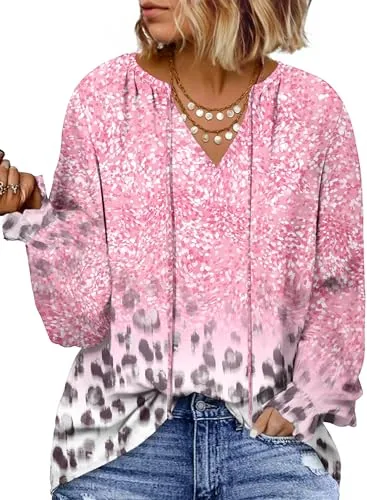
size 1X · long sleeve
4.1 out of 5 from 1,857 ratings
The tag is a legal document
Two rules enforced by the Federal Trade Commission decide what a clothing tag in the United States has to say. The first, under the Textile and Wool Acts, covers what the piece is made of. The second, the Care Labeling Rule, covers how to look after it. Neither says anything about how the piece fits, but both tell you a great deal about how it will behave.
The fiber rule is the one that produces the percentages. The FTC's guide to it puts the core requirement in one sentence:
the generic fiber names and percentages by weight of each constituent fiber must be listed in descending order of predominance.FTC, Threading Your Way Through the Labeling Requirements Under the Textile and Wool Acts, read 4 September 2026
Descending order of predominance is the part to remember. The first fiber on the tag is the fabric. The second is a modifier. On a tag that reads 95% polyester, 5% spandex, you are buying a polyester piece that stretches, and the stretch is a five percent story. On 60% cotton, 40% polyester, you are buying a blend that will feel like cotton, dry faster than cotton and shrink less than cotton.
The rule also polices what a maker may call a fiber. The FTC guide again:
Both natural and man-made fibers must be identified by their generic names.FTC, Threading Your Way Through the Labeling Requirements Under the Textile and Wool Acts, read 4 September 2026
Generic names are polyester, cotton, rayon, spandex, nylon, linen, wool. Trade names can appear beside them but cannot replace them, and that is the reason a tag never says only "stretch fabric" or "soft touch". When a product page uses a trade name and no generic one, the tag inside the garment will still carry the generic name, and that is the one that tells you how to wash it.
One more line from the same guide matters for the small print at the bottom of a percentage list:
In general, you may name only the fibers that comprise 5% or more of the fiber weight.FTC, Threading Your Way Through the Labeling Requirements Under the Textile and Wool Acts, read 4 September 2026
So a tag that reads 95% polyester, 5% spandex is at the edge of what may be named, and a fiber at three percent shows up as "other fiber". That is also the reason so many stretch fabrics land on exactly five percent spandex: it is the smallest share that may be named, and naming it sells.
The fiber mixes the Eytino makers print most
Counted from the maker's words on 345 of the 1214 pieces with a price today. The percentages are copied as the maker wrote them, in the maker's order.
| Mix as printed | Pieces | Share of the range |
|---|---|---|
| 100% polyester | 109 | 9% |
| 95% polyester | 100 | 8% |
| 65% polyester, 30% viscose | 22 | 2% |
| 97% polyester | 21 | 2% |
| 75% polyester, 20% viscose | 15 | 1% |
| 75% polyester, 25% cotton | 13 | 1% |
| 18% elastane | 12 | 1% |
| 55% cotton, 45% viscose | 10 | 1% |
Polyester with a five percent spandex thread leads, and it is the mix behind most of the waffle knits and ribbed pieces. Where the maker's text gives no percentages, the piece's page prints the fabric word from the title instead, and a page without percentages is a page where the tag inside the garment will say more than we can.
Eytino tops with the fiber mix on the page
size 3X · chiffon · long sleeve
4.1 out of 5 from 1,857 ratings
size 2X · long sleeve
4.1 out of 5 from 1,857 ratings
size 5X · long sleeve
4.1 out of 5 from 1,857 ratings
size 1X · long sleeve
4.1 out of 5 from 1,857 ratings
What the percentages mean for fit
The tag does not describe fit, but it predicts it, and a plus size shopper reads the percentages for that reason first.
Polyester with spandex. The workhorse of the Eytino range. Polyester holds its shape and its colour, and it dries fast. The spandex thread, at five percent, gives a knit its stretch and a woven its ease. A ribbed sweater dress in this mix hugs and recovers. A waffle knit top in it stretches over the bust and rests back. Neither shrinks much, and neither breathes as well as cotton, which matters in August.
Cotton and cotton blends. Cotton breathes and softens, and it shrinks if the dryer runs hot. A cotton tee is the piece to buy true to size and wash cold. A cotton blend with polyester keeps the feel and loses most of the shrink.
Rayon and viscose. The same fiber under two names, made from wood pulp, and the reason a flowy top drapes the way it does. Rayon is cool and heavy in the hand, and it is the fiber most likely to go a size smaller in a hot wash. Hand wash or cold, and lay flat.
Chiffon and lace. Usually polyester, usually no stretch. A chiffon blouse fits the band exactly and does not forgive, so the bust measurement decides. Lace shows skin by construction, and no percentage changes that.
Denim. Cotton with polyester and a little spandex. A stretch denim wide leg holds a high waist all day and gives back an inch by evening. The waist number decides on a button fly.
What each department is made of, by the fabric word in the title
The fabric word from the piece's title, counted by department. Where a title names no fabric, the piece is not in the count.
| Department | Pieces | Fabric words the makers use most |
|---|---|---|
| Dresses | 114 | lace (42), knit (9), ribbed knit (5) |
| Tops & Blouses | 339 | lace (61), chiffon (32), waffle knit (11) |
| Tees & Tanks | 93 | waffle knit (11), lace (11), chiffon (7) |
| Sweaters & Sweatshirts | 160 | knit (31), waffle knit (4), ribbed knit (3) |
| Cardigans & Jackets | 162 | knit (56), waffle knit (14), corduroy (10) |
| Pants & Jeans | 166 | denim (69) |
| Shorts & Skirts | 60 | denim (7), tulle (3), linen blend (2) |
| Jumpsuits & Rompers | 60 | not named in the title |
| Two-Piece Sets | 40 | knit (2) |
| Swimwear | 20 | ribbed knit (1) |
Lace leads the dresses and chiffon the tops, which tells you the summer half of the range does not stretch. The sweaters and cardigans are waffle and ribbed knits, which do.
The care line, and who is responsible for it
The second rule is the one that puts the washing instruction on the tag. The FTC's guide to the Care Labeling Rule opens with what it covers:
The Federal Trade Commission (FTC) enforces the Care Labeling Rule which requires manufacturers and importers to attach care instructions to garments.FTC, Clothes Captioning: Complying with the Care Labeling Rule, read 4 September 2026
Two things follow. The instruction has to be on the garment, not only on a web page, so a product page that says nothing about care is not the last word. And the instruction has to be one of two kinds:
Labels for clothing must have a washing or drycleaning instruction. If an item can be washed and drycleaned, the label needs only one of these instructions.FTC, Clothes Captioning: Complying with the Care Labeling Rule, read 4 September 2026
Nearly everything in the Eytino range is a washing garment, and the maker's text says so on most pages. What the rule adds is that the maker cannot print a care line as a guess. The guide is blunt about it:
You must have a reasonable basis for all care instructions and warnings — that is, reliable evidence to support the care instructions.FTC, Clothes Captioning: Complying with the Care Labeling Rule, read 4 September 2026
Reasonable basis means the maker tested it or has grounds to believe it. When a tag says hand wash, that is not a suggestion of luxury. It is the maker telling you they cannot stand behind the machine. When a tag says machine wash cold, the maker has decided the machine is safe at that temperature, and no more.
For a plus size wardrobe the care line is a sizing question in disguise. A knit that shrinks a size in a hot dryer is a knit you no longer own. Reading the care line before the first wash is cheaper than reading the size chart twice.
Care lines across the Eytino range
Counted from the words the makers use on the product pages. The tag inside the garment is the legal instruction; this is what the makers say online.
| Care line in the maker's text | Pieces | Share |
|---|---|---|
| Machine wash | 537 | 44% |
| Hand wash | 26 | 2% |
| No care line in the maker's text | 651 | 54% |
Where the maker's text has no care line, the piece's page prints none rather than inventing one. The tag in the garment will have it, because the rule requires it.
Eytino knits: read the care line before the first wash
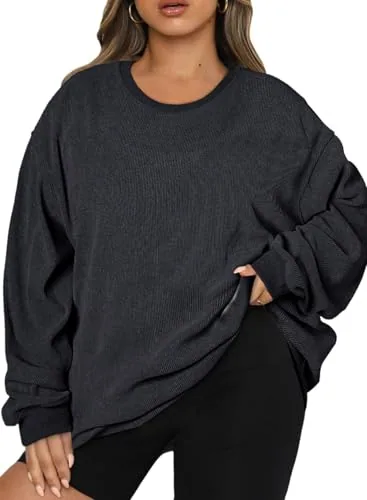
size 5X · long sleeve
4.5 out of 5 from 1,561 ratings
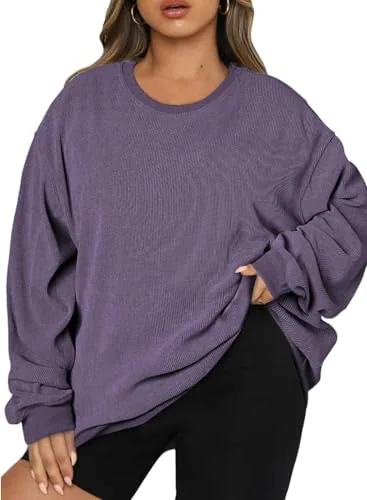
size 4X · long sleeve
4.5 out of 5 from 1,561 ratings
Washing the fabrics in this range
These are the routines that keep the Eytino fabrics the size you bought. They are not a substitute for the tag, which wins every time.
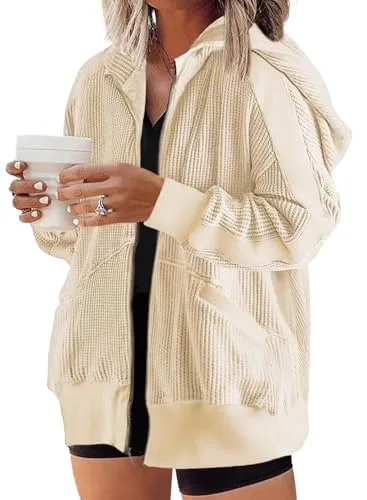
- Waffle knit and ribbed knit, polyester and spandex. Machine wash cold, inside out, and skip the high dryer setting. Heat does not shrink polyester much, but it relaxes the spandex over time, and a ribbed dress that has lost its recovery no longer hugs.
- Chiffon and lace, polyester. Cold wash in a mesh bag or by hand, and hang to dry. The fibers are tough but the construction is not: an open weave catches on a zipper in the drum.
- Cotton tees and sweatshirts. Cold wash, low dryer or line dry. The first hot wash takes the most shrink, and it takes it from the length before the width.
- Rayon and viscose. Hand wash or the gentlest cold cycle, and dry flat. Wet rayon is weak and stretches under its own weight on a hanger, then dries a new shape.
- Stretch denim. Wash rarely, cold, inside out. Every wash relaxes the spandex a little and every dryer cycle tightens the cotton back. The waist you bought is the waist in between.
The words that are claims, not fibers
Stretch, breathable, tummy control. These appear on the product pages of most of the range and on none of the tags, because none of them is a fiber and none is a care instruction. They are the maker's description of how the piece behaves, and the Eytino catalogue prints them under a heading that says exactly that: maker states.
Stretch is the most reliable of the three, because it follows from the spandex on the tag. Breathable is the least, because every fabric breathes and the word says nothing about how much. Tummy control describes a panel or a double layer at the front of a swimsuit or a pair of jeans. It is real, and it is a panel, not a garment that changes a measurement.
How often the makers make each claim
Counted from the product pages. A claim is counted once per piece whether it appears once or five times.
| Claim in the maker's text | Pieces | Share of the range |
|---|---|---|
| Stretch | 504 | 42% |
| Breathable | 803 | 66% |
| Tummy control | 44 | 4% |
Breathable appears on most of the range, which is a reason to weigh it lightly. Tummy control appears on a few dozen pieces, mostly swimwear and jeans, and on those it names a specific construction.
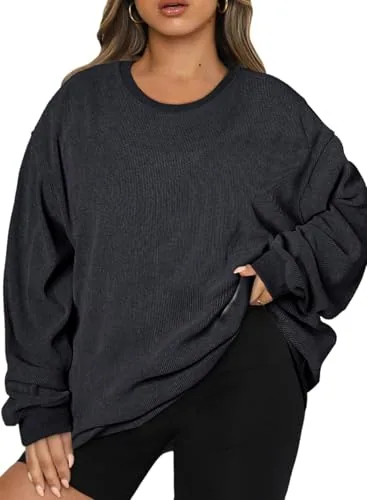
Eytino chiffon: no stretch, so the bust decides
size 3X · chiffon · long sleeve
4.1 out of 5 from 1,857 ratings
size 3X · chiffon · long sleeve
4.1 out of 5 from 1,857 ratings
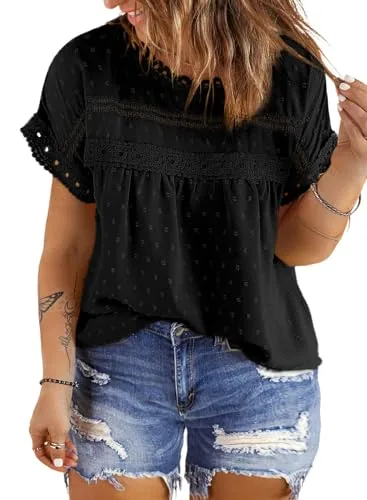
size 1X · chiffon · short sleeve
4.2 out of 5 from 1,304 ratings
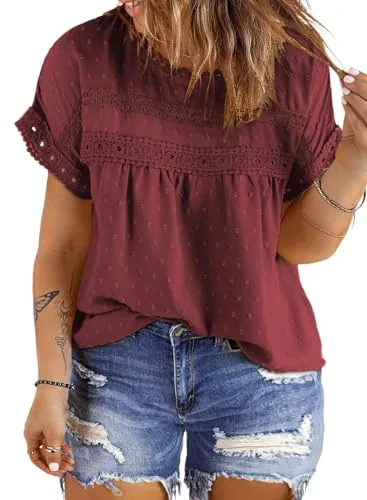
size 5X · chiffon · short sleeve
4.2 out of 5 from 1,304 ratings
Reading a product page with the rules in mind
Put the two rules together and a product page reads differently. The fiber line tells you whether the piece stretches, breathes and shrinks, in that order of confidence. The care line tells you what the maker will stand behind. Everything else on the page is description.
On a Eytino page the fiber mix, where the maker gives one, is in the specification table as the maker printed it. The fabric word from the title stands in where the mix is missing. The care line is the maker's, and where the maker gave none the row is empty. And the three claims sit under "maker states", separated from the facts by design.
The tag inside the garment remains the document that counts. When the page and the tag disagree, the tag is right, and the rule that made it says so.
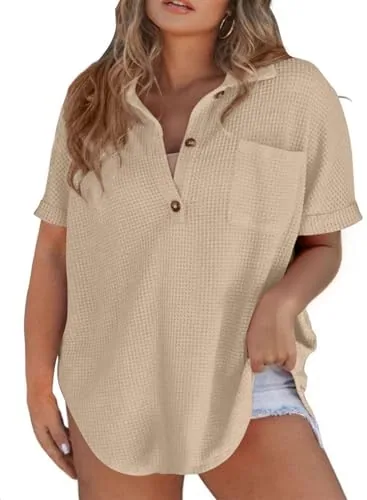
Eytino waffle knit: stretches, then rests
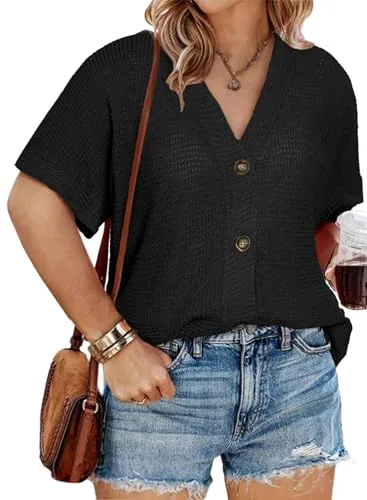
size 1X · waffle knit · short sleeve
4.3 out of 5 from 206 ratings
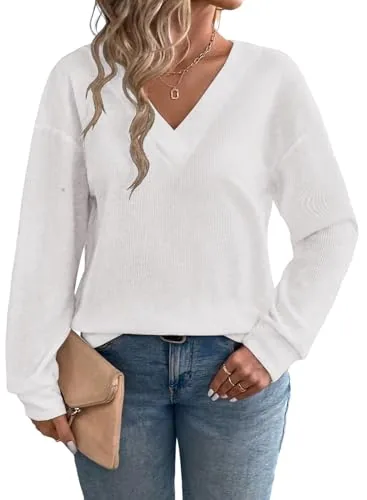
size 4X · waffle knit · long sleeve
4.2 out of 5 from 66 ratings
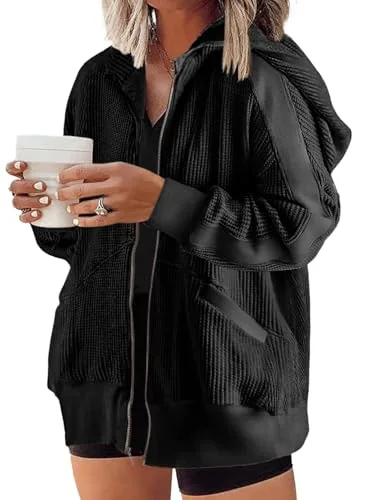
size 2X · waffle knit · long sleeve
4.1 out of 5 from 810 ratings
Before you go
More tops & blouses in the Eytino range
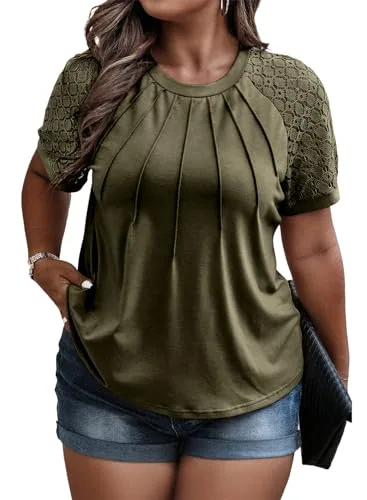
size 1X · lace · short sleeve
4.4 out of 5 from 1,561 ratings
size 1X · chiffon · short sleeve
4.2 out of 5 from 1,304 ratings
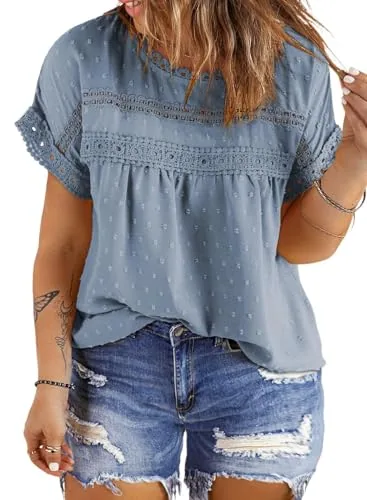
size 3X · lace · short sleeve
4.2 out of 5 from 1,304 ratings
size 5X · chiffon · short sleeve
4.2 out of 5 from 1,304 ratings
Sources
- Threading Your Way Through the Labeling Requirements Under the Textile and Wool Acts, Federal Trade Commission, read 4 September 2026
- Clothes Captioning: Complying with the Care Labeling Rule, Federal Trade Commission, read 4 September 2026